01
Records captured where the work happens.
03·Services
Native and cross-platform mobile apps designed for smooth performance on iOS and Android.
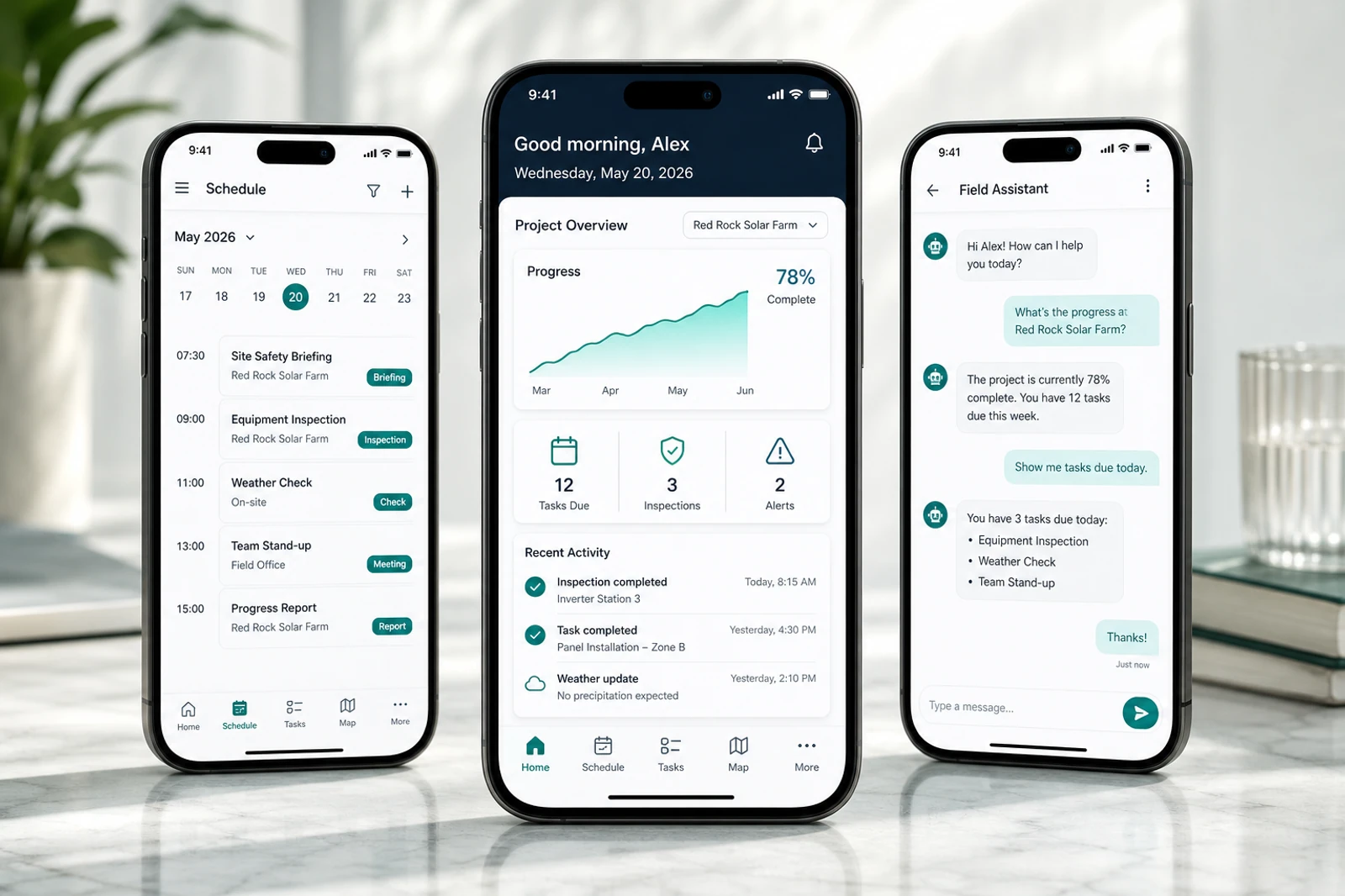
Mobile products connected to the same APIs, data, and workflows as your web software — apps people open and keep opening.
Mobile app development is for work that happens away from a desk: field teams, customers on a commute, operators on a floor. We ship iOS and Android apps that talk to the same APIs and data as your web product, so the phone is not a second process.
Cross-platform builds use Flutter or React Native when one codebase is the honest choice. Native modules go in where the store, the camera, or the device actually requires them. TypeScript keeps the React Native side aligned with the rest of a JS stack.
Store submission, permissions, and push notifications are part of delivery — not an afterthought. The measure of the app is whether people keep opening it because the next step is easier on the phone.
The work happens in the field or on the floor, but the system still lives on a desktop. People screenshot screens, delay updates, and catch up later.
We build iOS and Android apps on the same data and APIs as the rest of the operation — field tools, customer apps, and operator consoles that stay in sync.
Teams whose customers or staff need the product in their pocket, not only at a desk.
01
Records captured where the work happens.
02
The same data on phone and web, without a second process.
03
Apps people open because they make the next step easier.
Yes. Most products ship on both stores. We choose Flutter or React Native for a shared codebase when that is faster and still feels native, and we write platform-specific code when iOS or Android requires it.
That is the default. Customer apps, field tools, and operator consoles should share APIs, authentication, and records with the web application. A separate mobile database is how teams go out of sync.
React Native when the product already lives in a React/TypeScript stack. Flutter when a single UI toolkit across iOS and Android is the cleaner fit. We pick from the product, not from a preferred logo.